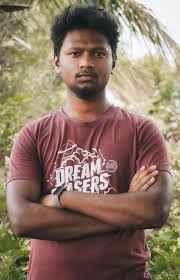
“I am from the Pallar community, a Scheduled Caste. I grew up near Usilampatti in southern Tamil Nadu. Our culture has always been treated like something that needs to stay quiet. Not erased, just controlled.
When I was seventeen, my cousin's wedding was held in our street. We had lights, a band, and food laid out. Nothing extravagant. Just one night where we didn't want to shrink ourselves.
Around nine in the evening, a group of men from the dominant caste walked in. One of them shouted, "Lower the music." My uncle nodded and asked the band to turn it down.
Then someone yelled our caste name. Loud. Sharp.
After that, everything happened fast. Stones were thrown. One hit the loudspeaker. Another cracked a tube light. I heard someone shout, "Who told you people you could celebrate like this?”
My aunt was pushed. Children started screaming. The band ran. Someone set fire to a bike near the entrance of our street.
When the police arrived, they didn't go after the men who threw stones. They walked straight into our area. One officer pointed at my uncle and said, "You people always create trouble.”
My uncle tried to explain. The officer cut him off. "You should have kept it quiet," he said. "You know how things are.”
No case was filed. Instead, we were warned not to complain. "If you take this further," the officer said, "it won't end well for you.”
The wedding ended that night. Lights off. Food untouched. My cousin got married the next morning in silence.
For a long time, we did what we were taught to do. We stayed quiet. We stopped celebrating openly. We told ourselves this was how survival worked.
But something shifted for me after that night. I realized silence wasn't protecting us. It was teaching others that we would accept anything.
A year later, after I returned from college, I started something small with a few friends from the area. We called it Cultural Memory Evenings. Not protests. Not meetings. Just evenings where we invited people to listen.
Once a month, we gathered in a school hall or a neutral community space. Elders spoke about how our festivals were celebrated when they were young. Women sang work songs. People talked about food, weddings, craft, and everyday life. We spoke about discrimination too, but only as part of our story, not the whole of it.
At first, only our own people came. Then teachers started attending. A few students. Eventually, people from outside the community sat in the back and listened. Nobody shouted. Nobody argued.
Something changed in those rooms. When you hear someone's grandmother talk about how she learned songs while working in the fields, it becomes harder to see that community as a problem.
I don't believe one evening can undo violence. But I've seen how visibility changes behavior. Police officers who once dismissed us now sit through these sessions quietly. Local leaders think twice before calling our culture disruptive.
That night at the wedding taught me what happens when our culture is seen as noise.
Cultural Memory Evenings exist so the next time we gather, our voices are heard as history, not as a threat.