I am Warli from Maharashtra. Warli painting is often treated as decorative art, but its original purpose was education. It is a way to record how life is organized when you do not rely on written texts.
Indigenous Voices
Mahesh Vetal
Contribution by tribe: Warli visual storytelling tradition.
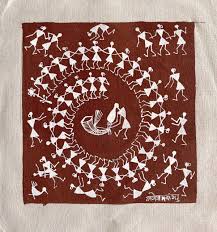
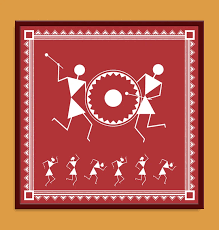
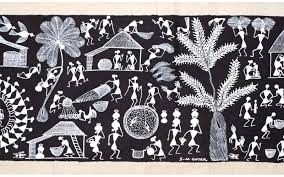
Each painting records how life works. Farming cycles, marriages, collective labor, rituals, and relationships with nature are mapped visually. The figures are simple because clarity matters more than detail. The shapes are repeated so a child can recognize the pattern and understand the meaning without explanation.
There is no central hero in a Warli painting. Life is shown as a circle, not a hierarchy. The community is always part of the scene. People are shown working together in fields, carrying water, or dancing in a circle that represents balance.
The drawings also encode rules. A certain placement of huts shows how a village is arranged. A line of figures carrying tools shows what work is done first and what comes next. These are not random decorations. They are instructions that can be read by anyone who grows up seeing them.
When the paintings are repeated in homes during rituals, children absorb the sequence of events. They learn which tools belong to which tasks and how the community moves through the year. The art holds a schedule, a memory, and a set of shared responsibilities.
What galleries display as folk art is actually a structured system of visual pedagogy, designed to carry knowledge across generations without written texts. The value is not only in the image, but in the method it preserves.